Dear you,
What should you write in a letter to your future self?
Write what only today's you knows: a few plain details of today, what you're worried about and how you guess it ends, something you're quietly proud of, what you hope changes and what you hope doesn't, and two or three questions you want answered. Keep it kind and short. Then, when it opens, write back.
That last step matters more than it sounds. In a study described by the Society for Personality and Social Psychology, Chishima and Wilson (Self and Identity, 2020) had students write to their self three years ahead and then write a reply as that future self. Only the two-way exchange raised students' sense of connection to their future self right away; a single letter didn't.
A letter to the future is half a conversation; the reply is the other half.
Your first week, one prompt a day
Ten minutes a day is enough. By Sunday you have a letter worth sealing.
- Day 1Three facts about today.
Where you are, what's on the table, what you had for lunch. Small details are what future you won't remember.
- Day 2What's on your mind.
One worry, and how you think it'll turn out. Future you gets to see how good your guess was.
- Day 3A quiet win.
Something you did well that nobody noticed.
- Day 4Change and keep.
One thing you hope has changed by the time this opens, and one you hope hasn't.
- Day 5Questions.
Two or three you genuinely want answered. "Did you ever call Gran back?" beats "Are you happy?"
- Day 6Pick the distance.
A month or a year for a first letter. In a 2018 study in the Journal of Experimental Psychology: Applied, Rutchick and colleagues found students who wrote to themselves 20 years ahead exercised more in the following days than those who wrote three months ahead.
- Day 7Seal it, and plan the reply.
Read it once, fix nothing major, and seal it. Put a note on the opening day: "write back".
Ten minutes a day for seven days writes a better letter than one heroic evening.
Build the letter here
Fill in what you have. Your words stay in this browser tab and aren't sent anywhere. Nothing is saved when you close it, so copy or print what you write.
Where to keep it sealed
Dear You is our app, so weigh this column accordingly. All three work; pick the one you'll actually open.
How Dear You keeps the conversation going
You can seal a letter to your future self for a week, a month, a year, three years or five. It stays locked until its day, then opens in the app. When it arrives, you write back and seal the reply for a later you, and letter threads keep that going for years.
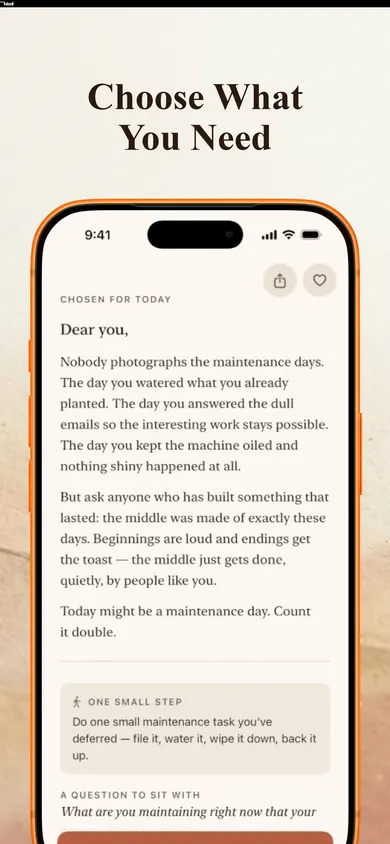
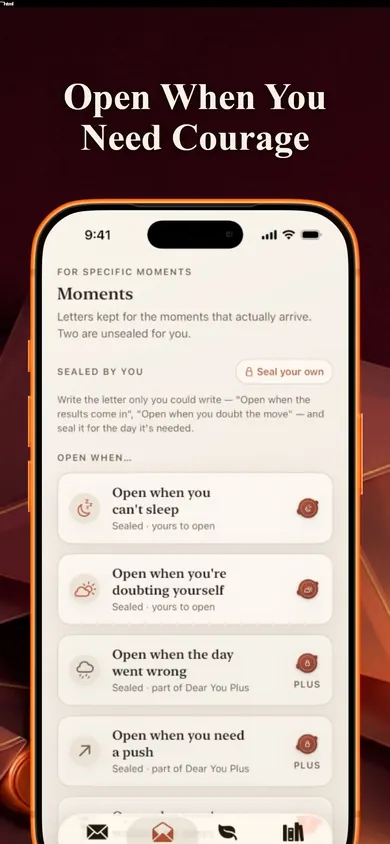
One design decision we care about: there are no streaks. A quiet week costs you nothing, because a letter habit that punishes you for missing a day stops being a letter habit.
Questions people ask
How long should a letter to your future self be?
Shorter than you think. Two or three hundred words is plenty for a first letter. A page you finish beats a long one you abandon on day two.
How far ahead should I seal it?
For a first letter, a month or a year. A month is close enough that you will still recognize the worries; a year is far enough that the answers will surprise you. Save three and five years for your second letter.
Should I write about bad things?
You can name what is hard right now, briefly and kindly. Avoid writing instructions your future self must follow or blame for things you cannot change. Write to them the way you would write to a friend you like.
What do I do when the letter opens?
Read it, then write back. Answer the questions it asked and say what changed. In Dear You you can seal the reply for a later you, so the conversation keeps going.
Who should start elsewhere
If writing about your life right now feels heavy rather than hopeful, a sealed letter can wait. Talk to someone you trust first. Dear You is a reflection and writing app, not a medical or mental-health service, and if you're in crisis in the US you can call or text 988.
If you want a shared family time capsule, or letters that reach other people, Dear You isn't built for that: everything stays on your own iPhone.
Honest limits
- The studies above are small and mostly with students. They suggest a reply matters; they don't promise a letter will change your habits.
- The free version of Dear You holds one future letter waiting at a time. Unlimited future letters are part of Dear You Plus, a subscription.
- Letters live on your iPhone. If you lose the phone without a backup, they go with it, so use the app's export or password-protected backup.
Yours, the studio at Honest Little Apps
Seal it tonight, open it next year.
Your first future letter, write-back notes, Face ID lock and PDF export are free in Dear You. No account and no ads.