
From the UnFight studio · Updated November 2026 · 7 minute read
How do you split holidays between families?
Most couples pick one of six methods: alternate years, split the day, split the season, host everyone, rotate by holiday, or stay home and visit after. Choose by distance and by which days matter most to each of you, write the rotation down for several years, and tell both families early, together.
The fight is rarely about the turkey. It's about loyalty, tradition and who gives something up. That's why the order matters: agree between the two of you first, then talk to your families as a team. The planner below gives you a fair starting proposal, so the conversation starts with a draft instead of a demand.
Holiday split planner
Build a four-year rotation
Name both families, tick the days that matter, and pick how far apart they live. Everything stays on this page.
One design decision: the planner always starts with the first family you type, then swaps every year. Nobody "wins" year one for long, and a written rotation means you only have this conversation once, not every November.
Agree as two, then tell them as one.
Six ways to split the holidays
| Method | Best when | Watch for |
|---|---|---|
| Alternate years | Families live a flight apart | A whole year without one side |
| Split the day | Both are in the same town | Two big meals and a rushed drive |
| Split the season | A few hours' drive apart | One holiday matters more to someone |
| Rotate by holiday | Families care about different days | Keeping track; write it down |
| Host everyone | You have the space and energy | Doing all the work yourselves |
| Stay home, visit after | Young kids or burnout | Hurt feelings if not explained early |
Travel is a real cost here. AAA projected a record 122.4 million Americans would travel 50 miles or more between December 20 and January 1 last season, 109.5 million of them by car. If the plan means two long drives in one week, that's a reason to choose a different method, not a test of love.
Why holiday plans start fights
Holidays stack stress on top of each other. In the American Psychological Association's November 2023 poll of 2,061 adults, 89% said worries like money, missing loved ones and family conflict caused them stress during the season, and 58% named overspending or not having enough to spend. Money doesn't stay out of it either: Fidelity's 2024 Couples & Money study found 45% of partners argue about money at least occasionally, so agree on a gift and travel budget in the same talk.
How you open matters as much as what you decide. The Gottman Institute's piece on softened start-up sums up their research simply: discussions tend to end on the same note they begin. "I miss my mom's Christmas Eve and I'd love to protect it" lands very differently from "you always pick your family".
How UnFight helps with the holiday talk
- 1
Pause before you respond
A quick or guided pause, or simple grounding. If it's getting heated, an optional break timer (5, 20 or 30 minutes) with an editable message you can send if you choose.
- 2
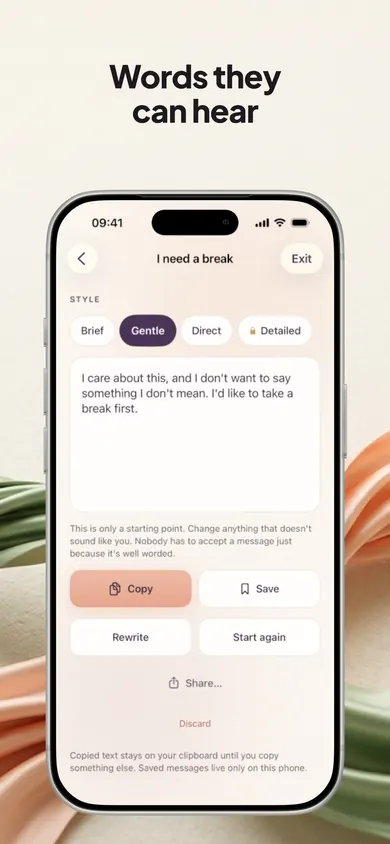
Find words they can hear
Say It Right covers nine situations, including raising a concern and setting a boundary. Get an editable Brief, Gentle or Direct draft that keeps your meaning.
- 3
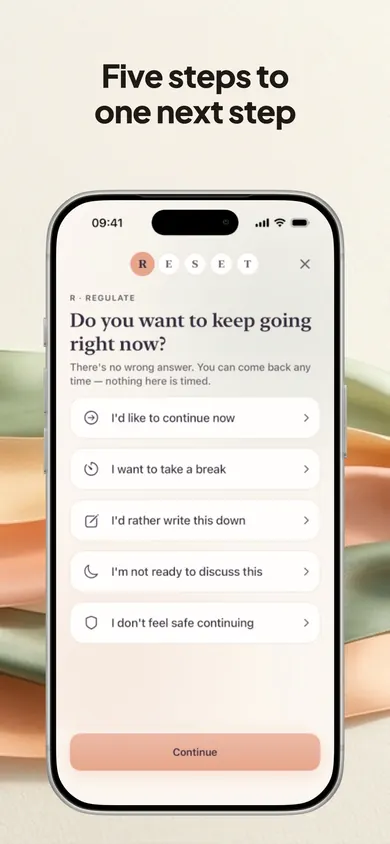
Agree on a next step
The RESET Method walks you to a clear next step, like a voluntary agreement. A private proposal stays a proposal until you've both actually said yes.
Calm Down, the break timer and Say It Right are free; one guided RESET session a week is free, with unlimited sessions and agreements in the optional Premium. Your writing is stored on your iPhone, with no account.
Who should pick something else
- If you or your kids aren't safe around a family member, a rotation chart isn't the answer. UnFight's "I don't feel safe continuing" option shows safety resources instead, and if you're in danger, call 911 or your local emergency number.
- If this is one fight in a long pattern, a counselor can help in ways an app can't. UnFight is a self-guided communication tool, not therapy.
- If you're co-parenting after a divorce, your custody order or parenting plan sets the holiday schedule. Use that, and get legal advice for changes.
Honest limits of the planner
It handles two families and the five days listed. Blended families, three or more households, or holidays that move each year (Hanukkah's dates shift on the Gregorian calendar) need a hand edit. It also can't weigh feelings: if Christmas Eve means everything to one of you and little to the other, trade for it openly rather than letting the chart decide. Gottman's "make the holidays your own" advice is a good reminder that a tradition you build together counts too.
Holiday split questions
What's the fairest way to split holidays between families?
Fair usually means each of you gets the days that matter most to you over time, not a perfect 50/50 every year. Alternating years or splitting the season are the most common starting points; adjust for distance and kids.
Who should tell the parents about the plan?
Each of you tells your own family, ideally on the same day, and you both say "we decided". It stops the plan from looking like one partner's idea.
When should we tell our families?
Early, before anyone books travel. For Thanksgiving and Christmas, a conversation in September or October gives everyone time to adjust.
Can we stay home for the holidays?
Yes. Plenty of couples, especially with young kids, take a home year and visit before or after. Explain it early and warmly, and offer a specific alternative date.
Talk it through, not out.
Pause, find your words and agree on a next step, privately on your iPhone.