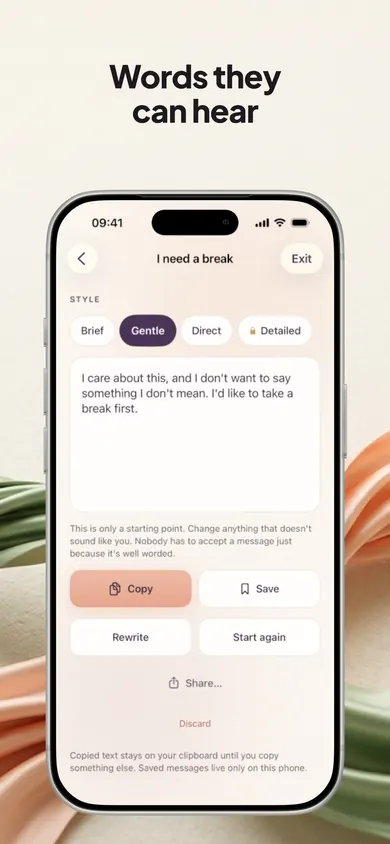
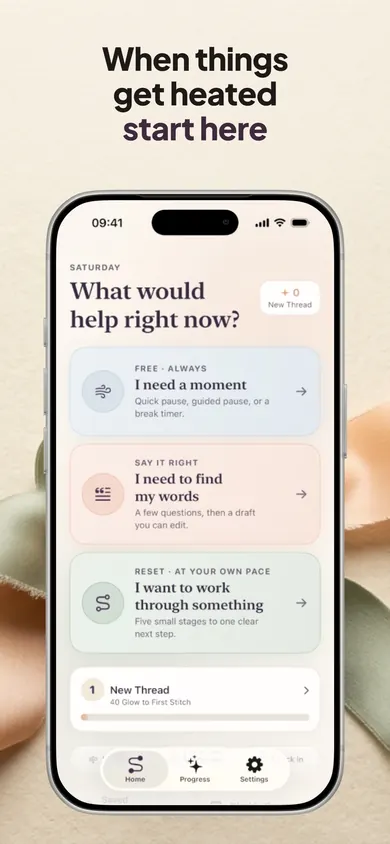
How do you apologize after a fight?
Say plainly what you did wrong and that it was on you. Offer to repair it. Add that you're sorry, a short explanation that isn't an excuse, and what you'll do differently. Asking for forgiveness is optional. That order comes from a 2016 Ohio State study that ranked six parts of an apology.
In the study, published in Negotiation and Conflict Management Research and summarized in Ohio State's April 2016 release, 755 people rated apologies containing anywhere from one to all six parts. The more parts an apology had, the better it was rated. Lead author Roy Lewicki called acknowledging responsibility "the most important component", and said asking for forgiveness is "the one you can leave out if you have to."
One caveat we want to be upfront about: the scenario was a job candidate apologizing for a mistake, not a couple. The pattern is a useful guide for partners, not proof about your relationship.
| # | Part | Sounds like |
|---|
| 1 | ResponsibilityRanked most important | "I was wrong to bring up your mom like that." |
| 2 | Offer of repairRanked second | "Can I call her with you on Sunday?" |
| 3 | RegretTied third | "I'm sorry. I hurt you." |
| 3 | ExplanationTied third | "I was stressed about money and took it out on you." |
| 3 | RepentanceTied third | "Next time I'll say I'm stressed instead." |
| 6 | Request for forgivenessLeast important | "Will you forgive me?" |
Own it first. Offer to fix it second. Everything else is support.
One apology, rebuilt
The fight was about a missed dinner with friends. The first apology, sent from the car, was "Sorry you feel that way, but I told you work was busy." It has regret in name only, an excuse where the explanation should be, and no responsibility at all.
The second try, an hour later, used four parts:
"I said I'd be there and I wasn't, and I didn't text. That's on me. I'm sorry you sat there waiting. Can I set up dinner with them next week, my treat? And next time I'll text the moment I know I'm running late."
It skipped the request for forgiveness. Per the study, that's the part you can leave out.
Apology questions couples ask
Should I apologize if I think we were both wrong?
Yes, for your part. An apology for your share is not an admission that the whole fight was your fault. Name your part only, and leave theirs for them.
Is it okay to apologize by text?
A text can open the door, especially if one of you needs space first. Follow it with a spoken conversation, because tone and a chance to respond matter.
What if they don't accept my apology?
Forgiveness is theirs to give, on their timeline. Ask whether there is anything you missed, keep your offer of repair, then give it time.
How soon after a fight should I apologize?
Once you are both calm enough to listen. If you are still flooded, take a break of at least twenty minutes first, then come back.
The Gottman Institute describes a repair attempt as "any statement or action — silly or otherwise — that prevents negativity from escalating out of control," and notes that consistent failure to repair predicts an unhappy future (Zach Brittle, Gottman Institute, 2014, updated 2026). A good apology is one kind of repair; it doesn't have to wait for the fight to end.