UnFight app iconKinder Conversations/ UnFight

Your same old fight isn't meant to end.

For couples stuck on repeat: sort your argument, then see the questions that loosen it.

By the UnFight team · Updated November 2026

Drag or tap to sort1 / 6
Whose turn it is to do the dishesCould a plan settle this for good?
Solvable: 0Keeps coming back: 0
Download on the App StoreOpen UnFight in the App Store · Free on iPhone

Why do we keep having the same argument?

Because most couple conflicts come from lasting differences in personality, needs or values, not from a fixable mistake. Gottman's research puts these "perpetual" problems at 69% of the problems couples face. The fight repeats when you argue about the surface topic instead of the need underneath it.

That figure comes from the Gottman Institute's October 2026 article "When the Fight Never Ends" by Mac Stanley Cazeau, LMHC, which says the other 31% are solvable problems that "respond to good old-fashioned compromise and problem-solving." So the first useful question about any repeat fight is which kind it is. The sorter above is a rough first pass; you can change your mind about any card.

Five myths about recurring arguments

  1. Happy couples have solved their problems

    Most of their problems are never solved. Gottman's research finds 69% of couple problems are perpetual; the difference is how the couple talks about them. Gottman Institute, Oct 2026

  2. A recurring fight means we're wrong for each other

    Any partner comes with recurring disagreements. Dr. Gottman's line, quoted in the same article: "you're inevitably choosing a particular set of unsolvable problems."

  3. Arguing often means the relationship is in trouble

    In Gottman's five couple types, "volatile" couples argue often yet are happy, keeping a positive-to-negative ratio of about five to one. The trouble types are marked by contempt and detachment, not frequency. John Gottman, Gottman Institute, 2014, updated 2026

  4. We have to stop fighting about it before things improve

    In a two-year study of 120 married couples, those who did three 7-minute writing exercises, describing their latest fight as a neutral third party, fought just as often but were less distressed, and their marital satisfaction stopped declining. Finkel et al., Psychological Science, via Northwestern, 2013

  5. The goal is to finally resolve it

    For perpetual problems, the Gottman article is blunt: the goal "was never resolution. The goal is dialogue." Gridlock starts when a couple fights about the fact that they can't solve it.

You can't end a perpetual fight. You can change what it costs you.

Who should pick something else

  • The "same argument" is about safety, threats or control. That isn't a perpetual difference to accept. In the US, the National Domestic Violence Hotline is 1-800-799-7233. In danger, call 911.
  • Contempt has set in: eye-rolling, mockery, name-calling. A couples counselor trained to work with gridlock will help more than any app.
  • One of you won't talk about it at all. UnFight's Partner Mode needs both people to opt in, on one phone, taking turns.
  • You're on Android. UnFight is iPhone only.

What your sort says, and what to ask next

Sort the six cards at the top of the page and your result appears here.

For anything that keeps coming back, the Gottman article suggests getting curious about the "dream within conflict" instead of re-arguing the surface issue. Its four questions, word for word:

  1. "Is there a story behind why this matters so much to you?"
  2. "Does this connect to your childhood or your past in some way?"
  3. "What's your ideal dream here, if nothing held you back?"
  4. "Is there a fear of what happens if this need never gets met?"

Ask them of yourself first, the article suggests, then of your partner. If either of you gets flooded, take a twenty-minute break and come back.

What we can't promise

The 69% figure describes couples in general; it can't tell you which of your fights is which. The writing study tested married couples in the US who were not in crisis. And UnFight is a self-guided communication tool, not therapy or counseling. It doesn't diagnose anyone or score your relationship.

One design decision follows from the research: UnFight's follow-ups have no scores and no winners. You check in later with honest answers like "it partly helped" or "we need more time", because a perpetual topic is managed over months, not closed in one talk.

Gridlock vs dialogue on the same topic

Gridlock
Dialogue
"We're doing this again?"
"This is one we manage, not one we solve."
Arguing about the dishes
Asking what fairness means to each of you
Each braces for the same ending
One small step, then a check-in
Score-keeping
"It partly helped" is a fine answer
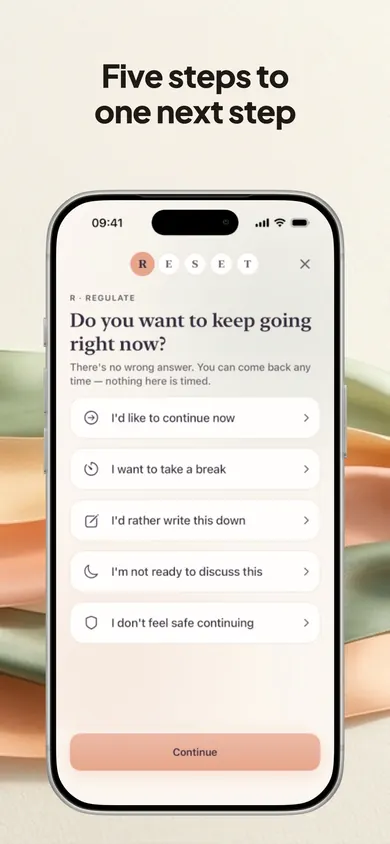
UnFight RESET Method screen asking whether you want to keep going right now No countdown, skip any step "I'd rather write this down" is an option

The thermostat fight, round 41

Did you turn the heat down again?

It was 74 in here. We're paying for it.

I'm freezing. You never care about that.

Same fight. Then, a week later:

I think the heat thing is one we manage, not solve. Can I ask what it's really about for you?

Honestly? Growing up, our house was always cold because money was tight. Warm means safe to me.

That makes sense. For me it's the bill. Money stress is my thing. Can we try 70 and a heated blanket for a month and check in?

Nothing got solved. The topic is still there. But the next round started from "warm means safe" instead of "you never care."

Talk about it without round 42.

UnFight's RESET Method walks you through one hard conversation at your pace, then helps you check in later. One guided session a week is free.

Download on the App StoreOpen UnFight in the App Store · Free on iPhone