What should you say when your partner shuts down?
Say less, not more. Name the pause without blame, offer a break, and promise to come back: "I can see this is a lot. Let's stop for now. I'll come find you in half an hour." Then actually leave it alone for at least twenty minutes, and do something calming yourself.
The twenty minutes isn't arbitrary. The Gottman Institute describes stonewalling as a listener who withdraws and shuts down, often because they feel overwhelmed or physiologically flooded, with a raised heart rate and stress hormones. Its guidance, updated October 2026, says the break "should last at least twenty minutes," spent on something soothing rather than replaying the argument.
Pushing harder tends to make it worse. A 2014 meta-analysis led by Paul Schrodt of 74 studies and more than 14,000 participants linked the demand-withdraw pattern (one pushes, the other pulls away) with lower relationship satisfaction and weaker communication, as ScienceDaily reported.
When one of you shuts down, the conversation isn't over. It's paused, and the pause needs a time on it.
One Tuesday night, three ways
8:40 PM · The dishes again
It starts small and gets loud. You're mid-sentence when they stare at the counter and say nothing. You can feel the urge to say it louder.
8:42 PM · They leave the room
Following them down the hall feels like caring. To someone who's flooded, it feels like being chased.
9:15 PM · Coming back
You both cooled off. The problem is still there, smaller.
Name the pause, set a time, come back softer than you left.
Where UnFight fits in that hour
 1
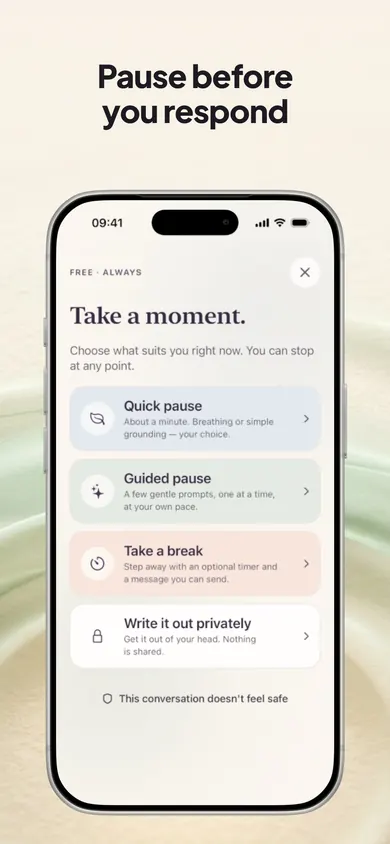
- 1Take a break. An optional timer for 5, 20 or 30 minutes, custom, or none, with a private reminder. There's an editable message you can send if you choose: "I want to continue this when I can give it my full attention. I'd like to take a break first." Nothing is ever sent for you.
 2
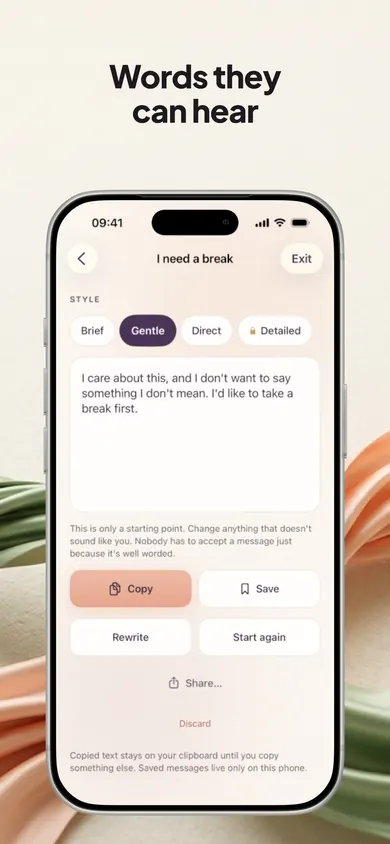
- 2Find your words. Say It Right covers nine situations, including needing a break, feeling misunderstood and not being ready to talk. Answer a few questions and get an editable Brief, Gentle or Direct draft that keeps your meaning.
 3
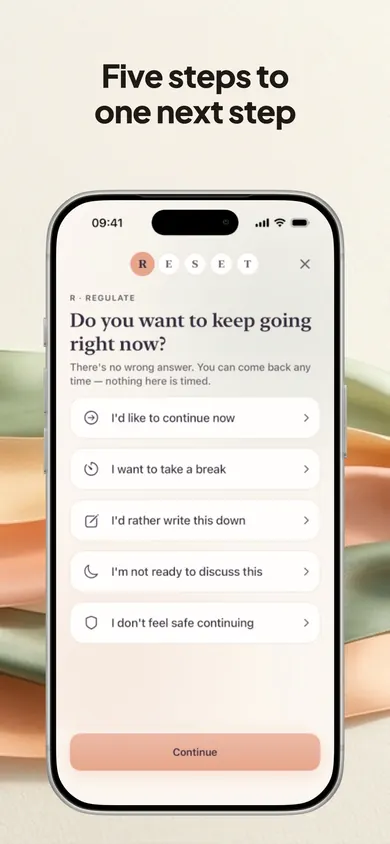
- 3Come back with a plan. The RESET Method is five small stages at your own pace: Regulate, Explain, State, Establish, Track. Choosing "I don't feel safe continuing" stops the flow and shows safety resources instead.
One design decision we made on purpose: Calm Down, the break timer, safety resources and Say It Right are free and unlimited, because the worst moment to meet a paywall is mid-argument. Premium adds unlimited guided sessions and more.
Honest limits
- Not therapy. UnFight is a self-guided communication tool. It doesn't diagnose anyone or score your relationship. If shutdowns are constant, a couples counselor can see patterns an app can't.
- Not every silence is flooding. Sometimes a partner goes quiet because speaking up hasn't felt safe. A script won't fix that.
- Who should pick something else: if you want a structured course or live coaching, look for a counselor or a program built around sessions. UnFight is for the moment itself and the follow-up.
Three steps for tonight
- Pause out loud. One sentence, no blame, with a time attached. Then stop talking.
- Calm your own body. Walk, breathe, shower, put on music. The Gottman guidance is to avoid replaying the argument or building your case.
- Come back first, and shorter. Thank them for the break, own one thing, and say your point in a sentence. If it rises again, pause again.
This page is general information, not therapy or counseling.
Pause now. Come back better.
A break timer, words you can actually say, and a gentle way back in. Private on your phone, no account.